On illustrating poetry
Jan. 6th, 2012 04:47 am![[personal profile]](https://www.dreamwidth.org/img/silk/identity/user.png) meeks posting in
meeks posting in ![[community profile]](https://www.dreamwidth.org/img/silk/identity/community.png) poetree
poetreeHello, I'm meeks and...I suppose I'm a rather unlikely person to be hosting a poetry discussion, since I'm not a poet, and I can't honestly claim to know very much about poetry! As a reader, I'm primarily attracted to poems that tell a story or describe a scene, and as an artist, I've found they can be a lot of fun to illustrate (and a few people here seem to think I'm actually good at it ;D).
The first poem I illustrated was Lorelei has a Dream by Michael S. S. Thedford. It's made up of 17 rhyming couplets about a hedgehog with an active imagination and a whole lot of books. We spent about four months collaborating on what turned into a 40-page picture book (currently available as a PDF ebook with an iBooks compatible ePub in the works, and hopefully a print edition if Mike can find the time to finish the kickstarter video /shameless plug ;)) I enjoyed it more than any project I had done in years, and more importantly, I actually liked the results. That's basically what convinced me to get back into illustration after giving it up when I finished school.
I've since done illustrations for nine more poems, as part of my Story Sketches project, and I've learned that illustrating a narrative poem is in some ways very much like illustrating a story in prose. I'm a very visual person, and if a story is well written, I'm almost always able to 'watch' the action unfold in my head as I read. Some of the prompts I receive are easy; the image is fully formed in my head as soon as I read the relevant scene. Others take a bit more work, and I need to do a few thumbnails before settling on a composition. If I haven't been told to focus on a particular scene (or verse), I typically look for something with a bit of action and/or interaction between characters. My goal is to capture a moment that draws the viewer in and ideally makes you want to know what happens next.
The thing about poetry that makes it simultaneously delightful and difficult to work with is that whether it's The Cat in the Hat or The Canterbury Tales, a story told in verse has a distinct character that often suggests a visual style, while typically (not always) offering very little actual description. To borrow from the quote with whichjjhunter so aptly started the week: the challenge of poetry illustration is to translate the painting that is felt into a poem that can be seen. I don't know if I've always succeeded, but you're welcome to judge for yourself. :)
Poetry-based Story Sketches (click images for full-sized versions):
When the poem I'm working with is based on another work, I like to read the original as well, and incorporate additional details from it where it's appropriate.
I think I've covered everything I wanted to write…feel free to ask me any questions!
meeks and...I suppose I'm a rather unlikely person to be hosting a poetry discussion, since I'm not a poet, and I can't honestly claim to know very much about poetry! As a reader, I'm primarily attracted to poems that tell a story or describe a scene, and as an artist, I've found they can be a lot of fun to illustrate (and a few people here seem to think I'm actually good at it ;D). The first poem I illustrated was Lorelei has a Dream by Michael S. S. Thedford. It's made up of 17 rhyming couplets about a hedgehog with an active imagination and a whole lot of books. We spent about four months collaborating on what turned into a 40-page picture book (currently available as a PDF ebook with an iBooks compatible ePub in the works, and hopefully a print edition if Mike can find the time to finish the kickstarter video /shameless plug ;)) I enjoyed it more than any project I had done in years, and more importantly, I actually liked the results. That's basically what convinced me to get back into illustration after giving it up when I finished school.
I've since done illustrations for nine more poems, as part of my Story Sketches project, and I've learned that illustrating a narrative poem is in some ways very much like illustrating a story in prose. I'm a very visual person, and if a story is well written, I'm almost always able to 'watch' the action unfold in my head as I read. Some of the prompts I receive are easy; the image is fully formed in my head as soon as I read the relevant scene. Others take a bit more work, and I need to do a few thumbnails before settling on a composition. If I haven't been told to focus on a particular scene (or verse), I typically look for something with a bit of action and/or interaction between characters. My goal is to capture a moment that draws the viewer in and ideally makes you want to know what happens next.
The thing about poetry that makes it simultaneously delightful and difficult to work with is that whether it's The Cat in the Hat or The Canterbury Tales, a story told in verse has a distinct character that often suggests a visual style, while typically (not always) offering very little actual description. To borrow from the quote with which
jjhunter so aptly started the week: the challenge of poetry illustration is to translate the painting that is felt into a poem that can be seen. I don't know if I've always succeeded, but you're welcome to judge for yourself. :)Poetry-based Story Sketches (click images for full-sized versions):
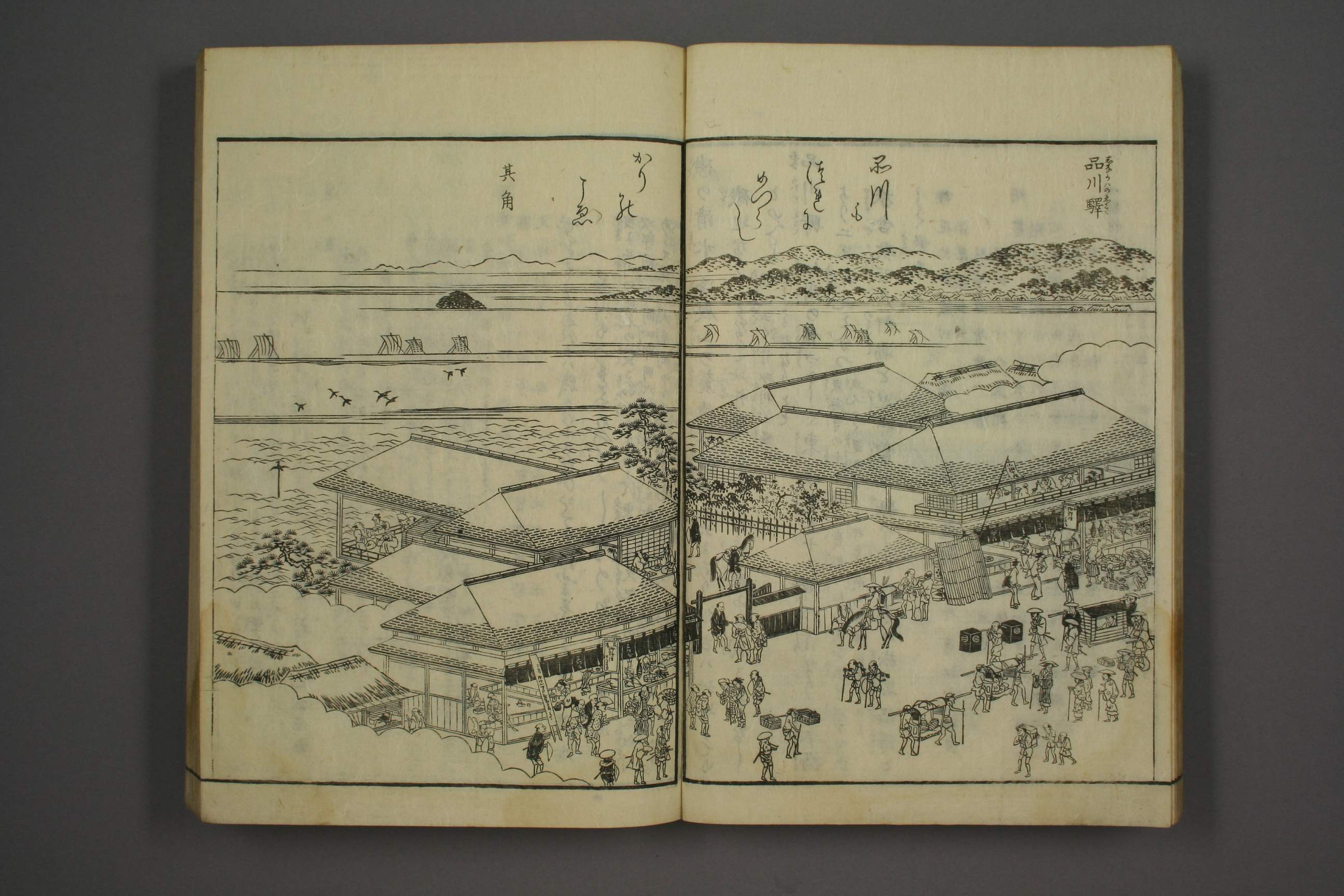
 | ysabetwordsmith's origami mage series is asian in both subject and form. Woodblock prints of China and Japan were my main inspiration for this drawing of unfolding wings, particularly in the background details unmentioned in the text of the poem. I intentionally kept the rendering light, and made no attempt to obscure the linework. |
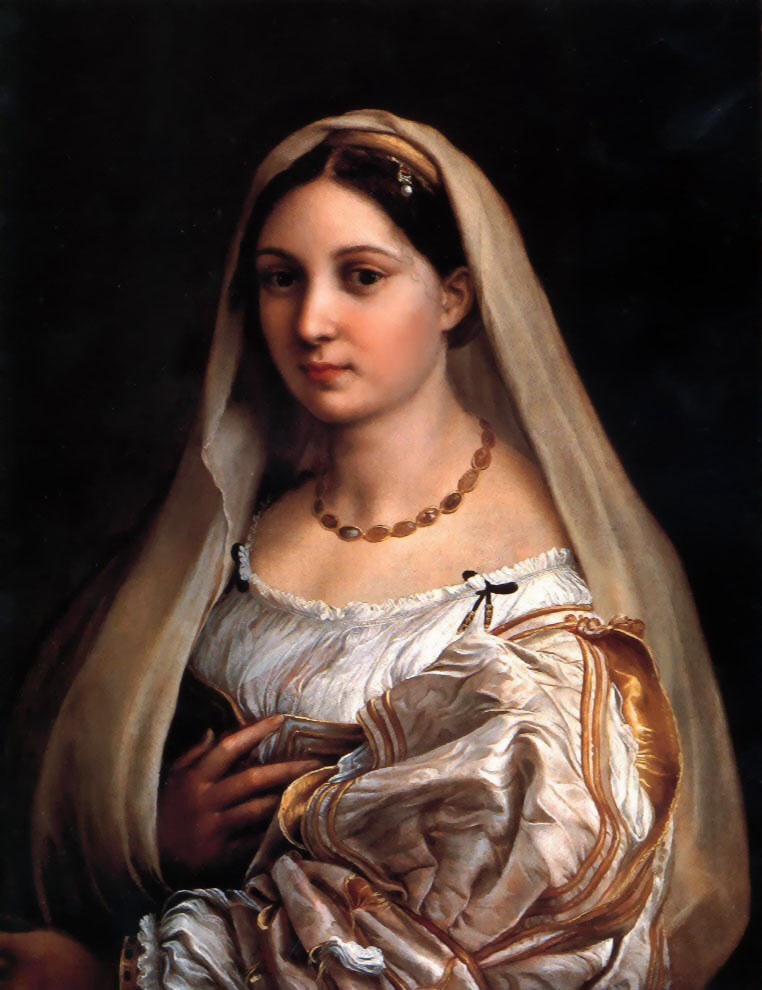
 | Husband by Hand, also by ysabetwordsmith takes place on the other side of the world, in Italy. The poem is longer and denser, with more detail, and I wanted the picture to reflect that. I may have over done the chiaroscuro a bit in this version of the image, but the idea here is to draw on paintings of the italian renaissance for inspiration. |
 | Shine On called for high contrast: a fallen star shining a bright light into the cold dark grey of the world around it. The dramatic lighting creates some hard edges, but I resisted the tendency to go pure black and white, which would have destroyed the texture. This isn't a setting that's shiny and polished. |
 | I think ysabetwordsmith gave me descriptions for the characters in The Henchmen's Hitch, so the only decision I really made with this was to keep it soft — kinda cloudy rather than dark and stormy — since it's only about attempted evil by people who aren't very good at it. |
 | I've been asked how I chose the point of view for this illustration of ysabetwordsmith's Restoration, but, honestly, this is just how I pictured the scene when I read it. You can't see anything from the other side, so it never even occurred to me to try it! |
 | Wanted: One Gnome by ![[livejournal.com profile]](https://www.dreamwidth.org/img/external/lj-userinfo.gif) minor_architect is written in haiku, but there's nothing really japanese about it. It's a cute whimsical tale about a suburban gardener with a rabbit problem. The solution comes in the form of a living garden gnome, so of course I made him look like one. (The lack of beard, according to my notes, was specified by Minor.) minor_architect is written in haiku, but there's nothing really japanese about it. It's a cute whimsical tale about a suburban gardener with a rabbit problem. The solution comes in the form of a living garden gnome, so of course I made him look like one. (The lack of beard, according to my notes, was specified by Minor.) |
When the poem I'm working with is based on another work, I like to read the original as well, and incorporate additional details from it where it's appropriate.
 | The art history geek in me had a lot of fun illustrating Mother-Tongue by jjhunter, who did such a brilliant job of writing her poem as though it had been translated from the anglo-saxon epic that I was inspired to make the picture match. Visual references included the Bayeux tapestry and the lindisfarne gospel, among others. I'm still not sure if that's what Grendel's mother is supposed to look like…but according to my research, neither does anyone else :P |
 | The Lamb's Plea To Them Both is jjhunter's response to two other poems, so this image is in fact inspired by three poems, by three different poets! The sketch is still quite rough, but it is, of course, intended to depict a pastoral landscape, with the distant shepherd chasing longingly after the object of his affections, who looks disdainfully back. |
 | I tried to avoid making the creature look too "monster movie-ish" when I did this sketch of ysabetwordsmith's Igor's creature, and added a bit of nineteenth-century european detail in the shape of the couch. Ysabet noted that I made Igor look like a bit of a geek, which I think suits his profession nicely :) |
I think I've covered everything I wanted to write…feel free to ask me any questions!




no subject
Date: 2012-01-06 01:16 pm (UTC)Thank you very much for writing this up & sharing it. You already know that I'm a huge fan of your work, but wow, this confirms it twice over. :o)
no subject
Date: 2012-01-06 04:23 pm (UTC)Thoughts
Date: 2012-01-06 05:01 pm (UTC)Re: Thoughts
Date: 2012-01-06 05:05 pm (UTC)Re: Thoughts
Date: 2012-01-07 08:15 am (UTC)Wow!
Date: 2012-01-06 05:12 pm (UTC)>>The first poem I illustrated was Lorelei has a Dream by Michael S. S. Thedford.<<
I like Lorelei and find the character very recognizable.
Story Sketches is one of the more successful crowdfunding projects I've seen. It got off to a very fast start, and quickly developed a loyal following, because it enabled a new project to draw on multiple extant audiences for other projects. Participation has been high in terms of illustration requests and comments -- which, by the way, help determine the sketches that get revised. Some illustrations have also brought in donations, another way to get them refined. That was a new concept, and worth remembering for other types of project.
>>a story told in verse has a distinct character that often suggests a visual style, while typically (not always) offering very little actual description.<<
Fascinating! I love the way you can read between the lines. You seem to be very reliable in picking out details, both in my work and other's work. Some artists tend to draw the same McFantasyLand over and over again, but yours are all different. They really do have a distinct flavor that matches the source material. *grin* I'm reminded of all the propwork done on the Narnia movie to ensure that the settings and objects "looked Narnian."
Your illustration of "Mother-Tongue" indeed reminded me of that tapestry!
Thank you for all your hard work and for this thoughtful essay.
Re: Wow!
Date: 2012-01-07 08:08 am (UTC)Well, it certainly helps that my prompters don't all write the same generic McFantasyLand! As you said, I try to match the flavour of the source material.
I think I've also benefitted from having some knowledge of art history, as well as from living in a very multicultural environment. It all adds to the store of visual reference I have available to help build mental images.
no subject
Date: 2012-01-06 09:34 pm (UTC)I wanted to say that I love the diversity of your drawings, though, and how beautifully they go with the poems. It's always such an amazing sight. And such a lovely essay on the thought you put into your illustrations too. ^-^
Thank you for writing this. I wish I felt I could give it the detailed comment it deserves, but I wanted to say what I could at least. ^-^
Well...
Date: 2012-01-07 08:50 am (UTC)A very good, very simple starting place is "two hurrahs and a hint." Look for two details you like, such as a character's pose or the color choices. Then suggest one thing that could be improved, like a door handle that seems a bit low.
Re: Well...
Date: 2012-01-07 09:53 am (UTC)Re: Well...
Date: 2012-01-10 04:01 am (UTC)Re: Well...
Date: 2012-01-15 11:47 am (UTC)I think my issue is just that my brain doesn't do mental images. It's textual/audial.
no subject
Date: 2012-01-10 03:51 am (UTC)That said, Meeks, I really like your work.
no subject
Date: 2012-01-07 01:09 am (UTC)